About UIA
Built for people responsible for their own capital.
UIA Institute is an independent investment research institute developing a unified architecture for owner capital. It combines long-term compounding through the ownership of quality businesses with selective opportunity during special market dislocations, while keeping the two return engines distinct in capital responsibility, risk boundaries, and exit logic.
01 · What UIA Is
One architecture. Two return engines.
UIA begins by asking where an investment’s expected return is intended to come from.
The first engine seeks long-term compounding through the ownership of quality businesses. The second seeks selective opportunity when special market dislocations create a meaningful gap between price, value, and the probable path of repair.
Technical Market Structure supports market observation and execution. It is not a third return engine.
02 · Why Owner Capital Is Different
Owner capital should not automatically imitate client capital.
Institutional managers operate within legitimate constraints: mandates, benchmarks, liquidity requirements, redemptions, committees, compliance, and career risk.
Capital owners may have different time horizons and different responsibilities. They may be able to wait, hold cash, concentrate selectively, tolerate temporary benchmark divergence, and separate long-term capital from opportunity capital.
These freedoms do not remove responsibility. They make clarity of capital purpose, risk boundaries, and decision authority even more important.
Capital owners may have a different clock.
03 · Shared Research, Separate Execution
Research together. Execute separately.
The two return engines can share business research, valuation discipline, Technical Market Structure, and post-decision review.
They do not share the same eligibility rules, capital, instruments, holding periods, risk limits, or exit logic.
A long-term position should not become a tactical trade merely because its price moves. A tactical trade should not become permanent ownership because an exit was missed.
04 · Founder
Tom Yang
Founder, UIA Institute · Author of The Capital Owner · Architect of the UIA Dual-Core Investment System
Tom Yang has invested in public markets for more than two decades. He manages personal and family capital exclusively and does not manage or accept outside funds.
He has a background in electrical engineering and earned an MBA in North America with a focus on investment. His professional experience spans business operations, corporate investment, and mergers and acquisitions, including roles as a General Manager and President.
This background allows him to approach investing from the combined perspectives of a capital owner, business operator, and capital allocator.
The Capital Owner and the UIA Dual-Core Investment System grew out of this long practice. Rather than teaching readers how to become fund managers, the work examines how owners of capital can take responsibility for their own judgment, capital, and results—and build an investment system suited to their circumstances.
05 · How UIA Develops
Built through use, review, and revision—not claims of certainty.
UIA is developed as an operating investment discipline rather than a fixed prediction model.
Assessments are documented, state changes are reviewed, errors are studied, and rules are revised when evidence justifies revision.
The objective is not maximum apparent precision. It is to remain directionally sound, causally coherent, and usable under uncertainty.
Bounded uncertainty is preferable to false precision.
06 · Public Research, Internal Implementation
Publish the reasoning. Protect implementation integrity.
UIA publishes its principles, reasoning, evidence responsibilities, decision dimensions, and the limits of its conclusions.
Public Research explains why. The Workstation presents the current structured assessment. Internal systems retain how the assessment is implemented.
Exact algorithms, weights, thresholds, calibration logic, feature engineering, state-transition implementation, and code remain outside the public research layer.
07 · The Public UIA Ecosystem
One research architecture. Four working entry points.
System
Understand the architecture, return engines, capital responsibilities, and decision boundaries.
Research
Study the methods, evidence responsibilities, functional modules, and reviewable outputs behind the work.
Library
Explore Core Research, thematic essays, and applied analysis in the public knowledge hub.
Workstation
Apply UIA’s public research capabilities to a known ticker through structured asset-level assessment.
08 · Books and UIA
The long-form foundation of the UIA architecture.
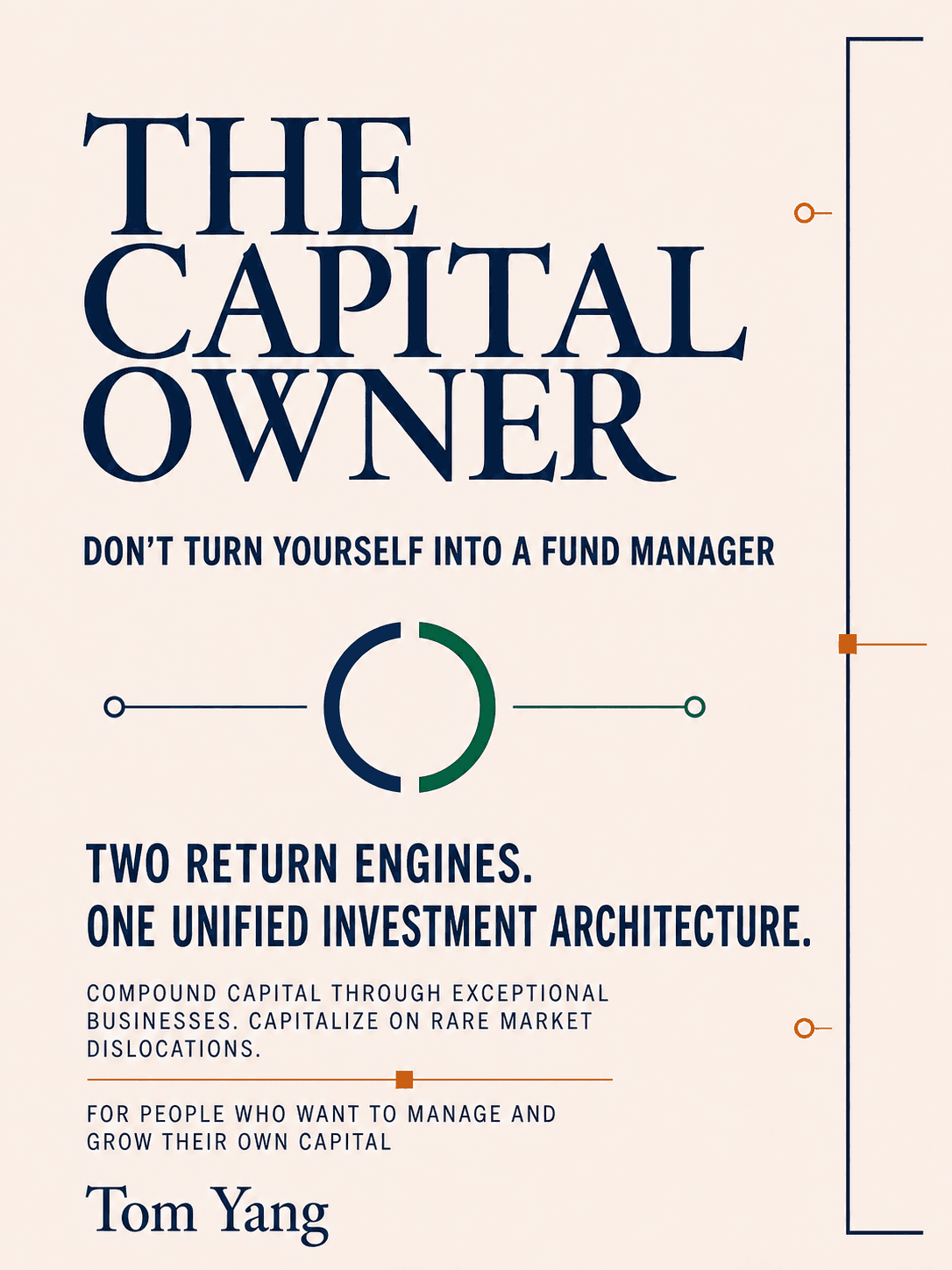
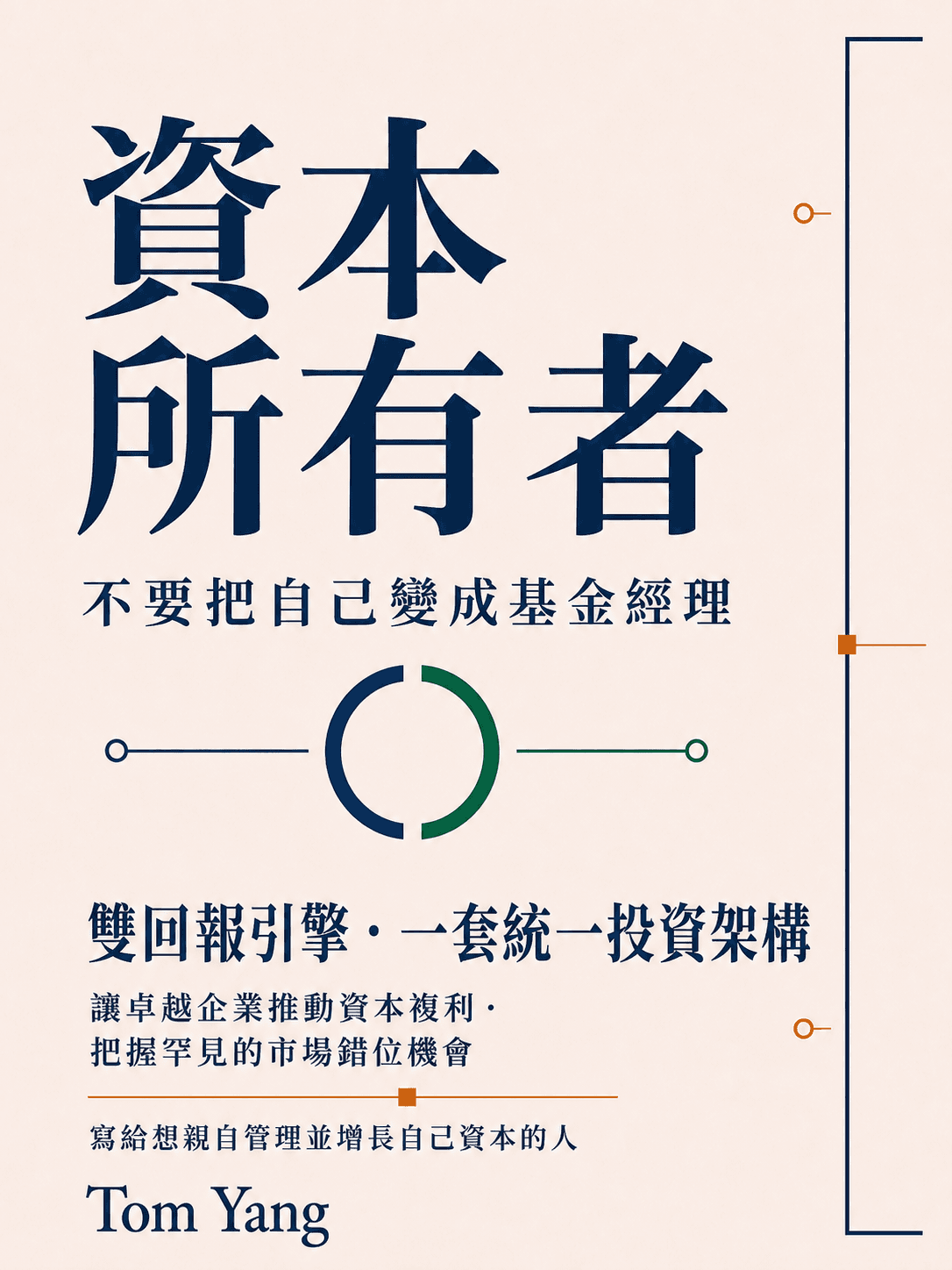
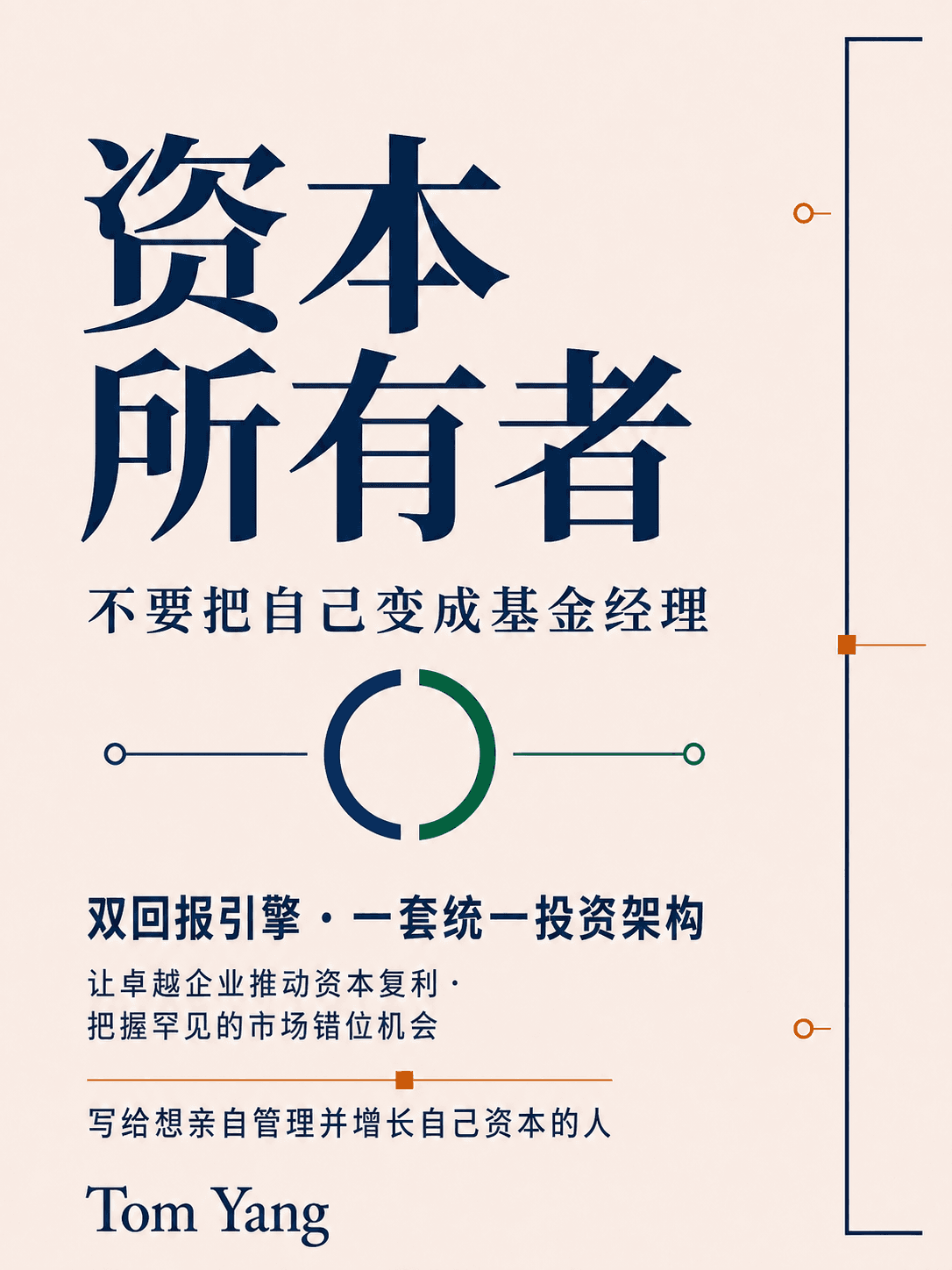
The Capital Owner develops the owner-capital philosophy and the reasoning behind the UIA Dual-Core Investment System in long form.
Its English, Traditional Chinese, and Simplified Chinese editions provide three language-specific entry points into the same owner-capital framework, connecting the books with UIA’s System, Research, Library, and Workstation.
UIA does not promise certainty or investment performance. Its purpose is to make investment reasoning more coherent, reviewable, and aligned with the nature of owner capital.